Google Search and AI visibility after a Laravel-to-Go migration
A growing queue of PHP jobs prompted a rebuild of a classifieds platform. Seven weeks after the switch, daily Google clicks were approaching 7,000 and the site was showing up more often in Google’s AI features.
On September 30, 2026, I moved a live classifieds platform from Laravel to Go. The queue was the reason. As more background jobs ran at once, the PHP workers were using too much RAM and CPU. On a site with more than 175,000 live listings, what happened when a seller edited a single ad mattered as much as how quickly the homepage loaded.
What changed when a seller paused a listing
In the Go version, pausing an ad updates the affected listing and its search entry. I tested that on a local copy with 164,356 ads. The update took 17 milliseconds. Rebuilding the whole location took 1,673 milliseconds and produced the same listing data. Both measurements came from the Go version. That test helped me decide which work belonged in a routine edit.
Go serves public listing and location pages as HTML from data prepared ahead of the request. Before switching traffic, I warmed the location pages, search indexes and sitemaps, and checked the old URLs, redirects and canonicals. That gave a visitor or crawler following an existing Google result a working route into the new site.
Original classifieds platform in Laravel · Classifieds platform rebuilt in Go
What showed up in Search Console
Traffic was already trending upward before September 30. There was a dip in early October. The steepest climb came in November. To put that in perspective, I compared the seven days before the switch with the final seven days shown. These are rounded daily averages estimated from the plotted lines.
| Daily average | September 23–29 | November 15–21 |
|---|---|---|
| Google Web clicks | ~3,700 | ~6,700 |
| Google Web impressions | ~27,000 | ~79,000 |
| Google generative AI feature impressions | ~130 | ~400 |
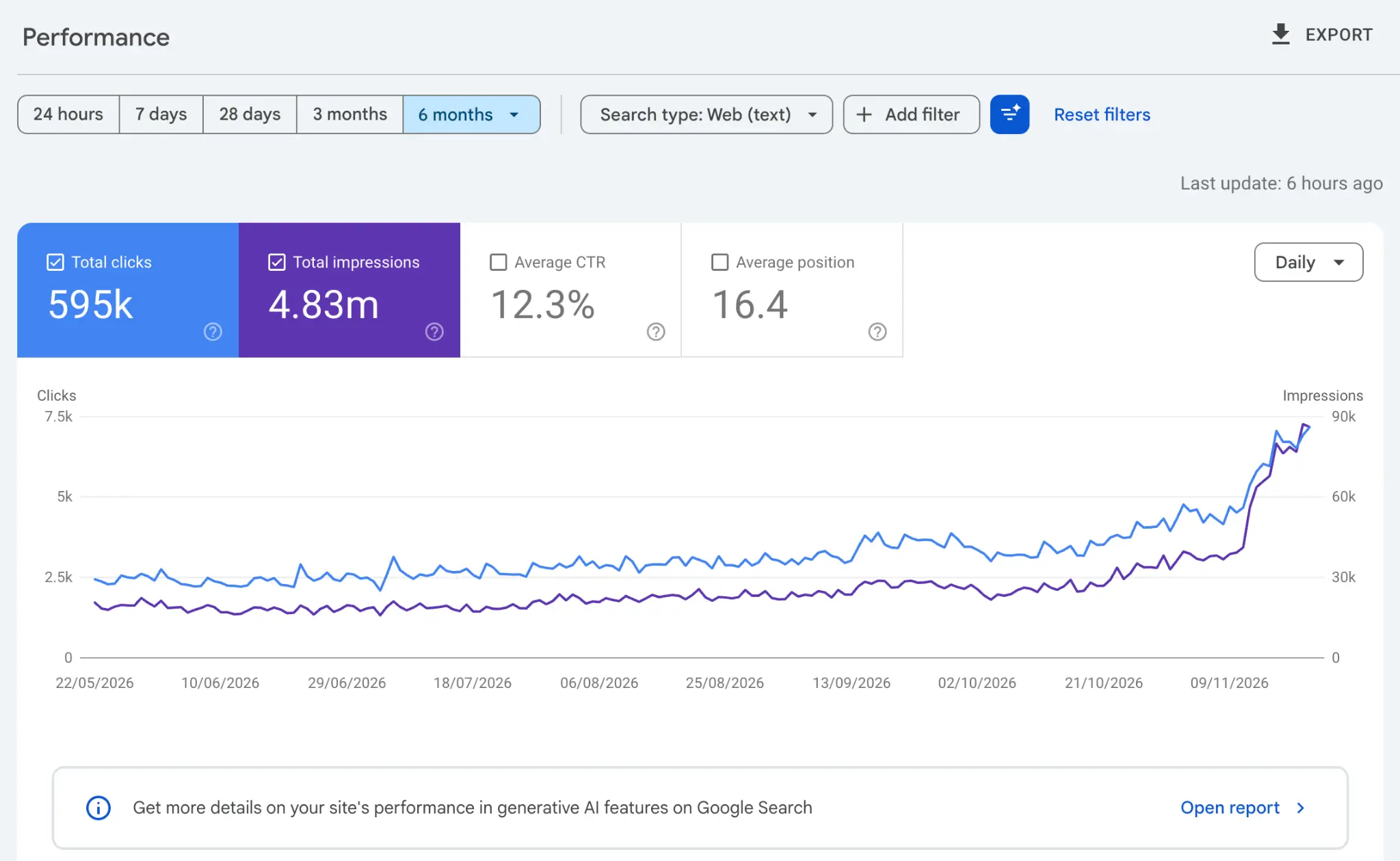
Figure 1. Across the full six-month window, Google Web recorded 595,000 clicks and 4.83 million impressions, with a 12.3% click-through rate.
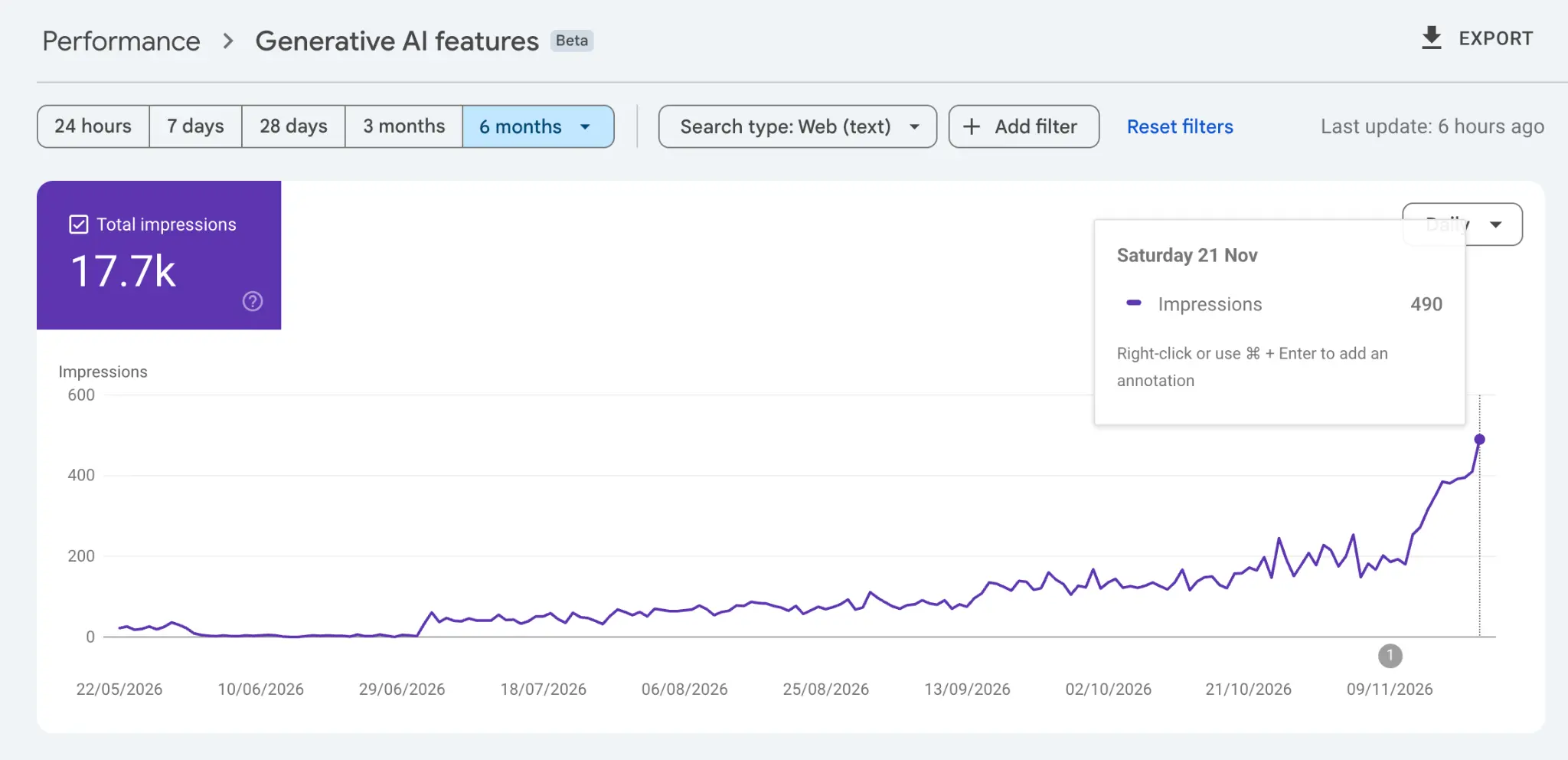
Figure 2. Google recorded 17,700 generative AI feature impressions across the six-month window. The November 21 tooltip gives an exact daily count of 490.
For answer engine optimization (AEO) and generative engine optimization (GEO), I wanted to know how often Google showed a link to the site in AI Overviews or AI Mode. The second chart measures exactly that. That daily average roughly tripled between the two weeks. Google documented an impressions logging error on November 9–11, which is why I left those dates out of the comparison. How Google counts AI impressions · Google’s reporting incident log
I can trace a paused listing through the new code and measure the work it saves. The search charts answer a different question. They show that visibility grew in the weeks after the migration, while leaving open how much of that growth the rebuild explains. The next thing I’d check is whether individual listings, city pages or both accounted for the gain in AI impressions.